

Choosing graphics for vehicles and boats
The right graphic depends on more than colour and artwork. Surface condition, daily use, sun, salt air and washing methods all affect how well a print will last on a vehicle or boat.
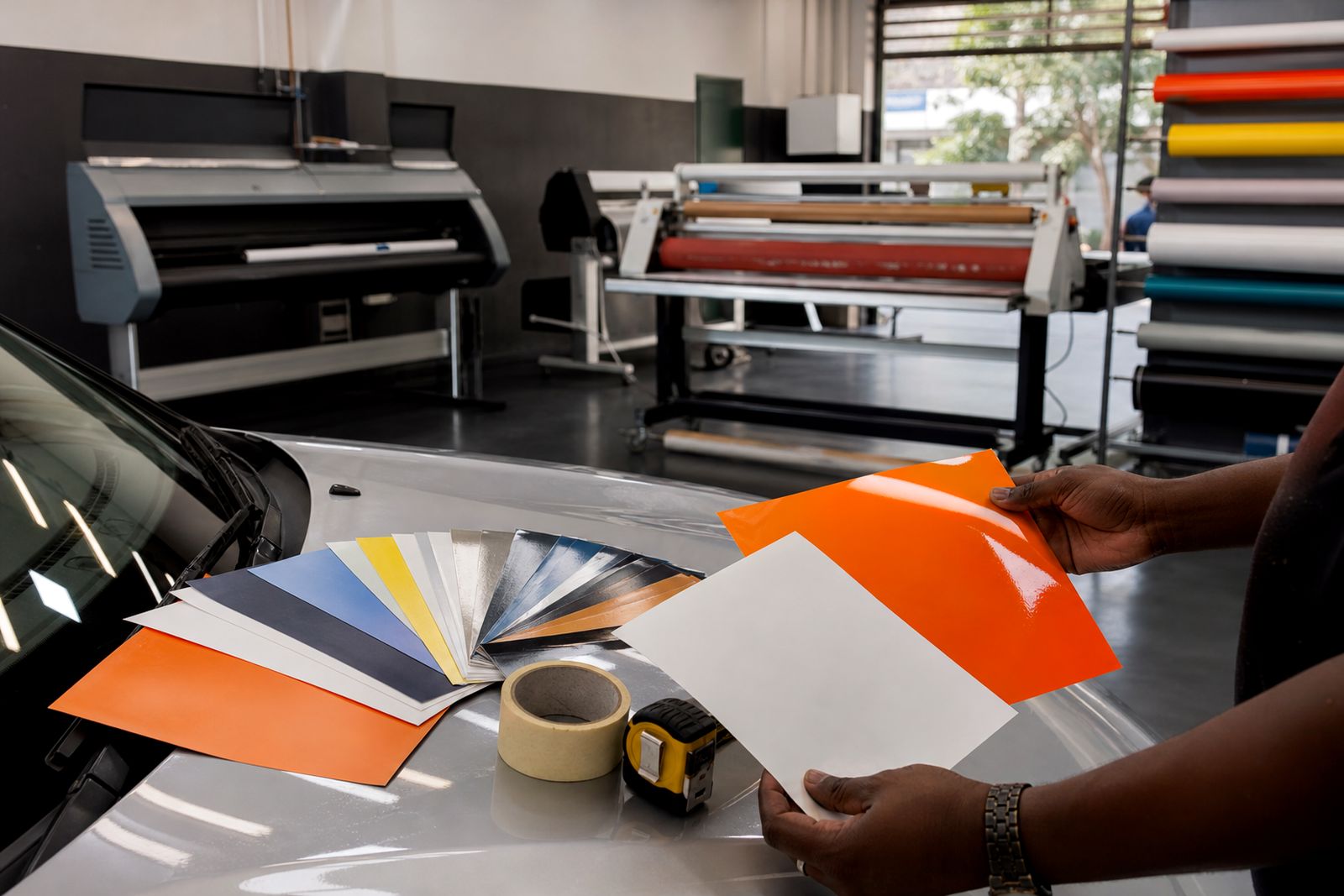
Start with the surface, not the artwork
Before choosing a print method or finish, check what the graphic is going onto. A flat painted van side takes graphics differently from a deeply corrugated panel, a fibreglass hull or a boat cabin with compound curves. On vehicles, paint condition matters just as much as shape. If clear coat is peeling, rust is lifting under the paint, or a respray has not cured properly, vinyl may not bond as it should. On boats, oxidation, chalking and salt residue can cause the same problem.
Good preparation saves rework later. A clean surface is not always a ready surface. Old wax, polish, silicone, diesel film and marine grime need proper removal before installation, otherwise edges can lift sooner than expected.
- Check for peeling paint, rust bubbles and cracked clear coat.
- Look at panel shape, recesses, rivets and mouldings.
- On boats, inspect gelcoat condition and any chalky oxidation.
- Note previous graphics, glue residue and repainted sections.
- Ask whether the item is stored indoors, under cover or outside full time.
Match the graphic to daily use
A family car used mostly around Durban will have different needs from a delivery bakkie doing long routes through KwaZulu-Natal, or a ski boat launched every second weekend. Think about how the vehicle or boat is used, where it is parked and how often it gets cleaned. A small cut vinyl logo can be enough for a private vehicle with light branding needs. A work fleet often needs larger printed panels or a fuller wrap so details can be read in traffic and at loading areas.
Boats add another layer. Trailered craft pick up road grit, while moored boats sit in salt air for long periods. Areas near cleats, hatches and fuel fillers often get harder wear. If crew walk over a section, or gear rubs against it, that spot may need a different finish or may be better left unprinted.
It helps to decide what the graphic must do first. Is it for identification, promotion, race numbers, registration support, sponsor space, or simple personalisation? Once that is clear, the size and placement become easier to plan.
Consider sun, salt and washing methods
Durban conditions are hard on printed material. Strong UV, warm rain, coastal humidity and salt air all shorten the life of graphics if the wrong material is chosen. Dark colours can show heat stress sooner on exposed panels and horizontal surfaces usually wear faster than vertical ones. Boats also deal with spray, fish blood, sunscreen, detergents and regular hose-downs, all of which matter when choosing a finish.
Tell your installer how the item is cleaned. Hand washing is kinder than aggressive brushing and harsh chemicals. Pressure washing can be fine when done at the right angle and distance, but too close on an edge can force water under the film. Some owners cause damage without realising it, then think the print itself failed.
- Full sun all day needs materials suited to long outdoor exposure.
- Salt air near the coast can affect edges and exposed joins.
- Frequent launch and recovery means extra abrasion on boats.
- Engine heat and fuel splash areas need careful placement.
- Regular pressure washing calls for edge-aware installation and care.
Choose between cut vinyl, printed panels and wraps
Not every job needs a full wrap. Simple lettering and one-colour shapes are often best done as cut vinyl decals. They are clean, readable and practical for registration numbers, boat names, shop delivery vehicles and basic fleet marking. Printed panels are useful when you need photos, colour blends, gradients or detailed branding without covering every painted area.
Wraps make sense when the graphic needs to cover a large portion of the body or hull, or when the design relies on full-colour impact across multiple panels. Partial wraps work well too, especially on vans and boats with sensible flat sections. A full wrap can look striking, but only if the base surface and intended lifespan justify it.
Ask about edges, joins and high-stress areas. Door handles, wheel arches, body lines, hatches and sharp corners are not equal. A practical layout often outlasts a fussy one. Big logos and strong colour blocks usually read better from a distance too.
Plan the layout around shape and visibility
Good graphics follow the object instead of fighting it. On a vehicle, key information should sit where people can read it when the vehicle is moving slowly or parked. Side panels do the heavy lifting, while rear graphics help in traffic and parking areas. On boats, the best positions depend on the hull shape, viewing angle at the slipway and whether the craft is seen on the trailer, on the water or both.
Measure properly before approving artwork. Curves can make circles look uneven and long text can break awkwardly over joins. Door gaps, fuel flaps, rails, windows and trim all interrupt a design. It is usually better to simplify than to squeeze too much into one area, especialy on smaller craft.
- Keep business names and main visuals on the clearest side areas.
- Use rear space for short, readable messages rather than crowded detail.
- Allow for doors, hatches, hinges and drain points.
- On boats, avoid placing vital text where fenders or ropes constantly rub.
- Check readability from a few metres away, not only on a screen.
Use a simple checklist before you book
A short planning list can prevent most of the common problems. Gather a few photos of the vehicle or boat from each side, plus close-ups of any dents, peeling paint or damaged gelcoat. Note the make and model if known, and say whether you want a decal set, partial wrap or larger coverage. If you already have artwork, mention the file type and whether colours must match existing signs or fleet units.
For boats, mention if the craft lives on a trailer, in a dry stack, under cover or at a mooring. For vehicles, mention whether it goes through car washes, gravel sites or high-pressure cleaning. This information helps the installer suggest a suitable approach from the start.
- Take clear photos in daylight, front, rear and both sides.
- Measure the main usable areas if possible.
- List any damaged paint, repairs or old graphics.
- Say where the item is used and how it is cleaned.
- Decide what matters most: visibility, durability, coverage or easy replacement.
If you are not sure what level of coverage is right, send your details through the contact form and ask for guidance. A practical recommendation is usually better than choosing the biggest option first.
What our Printing and Signage customers say
Verified Google reviews
Questions we get asked
Will graphics stick to an older resprayed vehicle?
Sometimes yes, but it depends on the paint condition and whether it has cured properly. If the paint is lifting, cracked or poorly bonded, vinyl may fail with it.
Are boat graphics different from vehicle graphics?
Yes. Boats deal with salt air, spray, launch abrasion and marine cleaning products, so material choice, preparation and placement need extra care.
Do I need a full wrap for business branding?
Not always. Many jobs are better served by cut vinyl decals or printed panels placed on the right sections for clear visibility and easier replacement.

Ask for a quote
Use the contact form to tell us what you want printed, where it will be used and whether fitting is needed, and Galloping Naartjie will reply with a quote.
Open the contact form