

Cut vinyl decals
Cut vinyl decals are shaped graphics made from solid-colour vinyl, trimmed to letters, logos and simple artwork without a printed background. They suit clean branding on windows, vehicles, boats, products and interior surfaces where you want a neat, durable finish.

What cut vinyl decals are
Cut vinyl decals are made by plotting solid-colour vinyl into a shape, then removing the extra material so only the design remains. Unlike a full printed sticker, there is no background panel unless the artwork calls for one. This makes them useful for names, contact details, registration markings, simple logos, striping and one-colour graphics that must look tidy from close up and from a distance.
They are commonly fitted to shop windows, interior walls, fridges, boats, trailers, bakkies, canopies, helmets, cooler boxes and equipment cases. For Durban conditions, the material choice matters because coastal humidity, salt air and strong sun can shorten the life of the wrong film. We use the decal type to match the surface and expected use, which helps with adhesion and colour hold.
Sizes, colours and working limits
Cut vinyl works best on clean vector artwork with clear edges. Fine detail can be produced, but every material has a limit. Very thin strokes, tiny counters inside letters and rough surfaces can make small decals hard to weed, apply and keep in place over time. If your logo has gradients, photographs or shaded effects, a printed sticker or printed wrap material is usually the better option.
- Typical text height starts from about 15 mm for simple lettering, depending on font style.
- Very small decals under 25 mm wide need bold shapes and limited detail.
- Large one-piece decals can run well over 1 metre in length, but installation becomes more surface-dependent.
- Standard finishes are usually gloss or matt, with colour selected to suit visibility and surface colour.
- Layered decals can combine more than one vinyl colour, but registration and thickness must be considered.
Windows and smooth painted panels are usually straightforward. Textured plastic, powder-coated surfaces with heavy orange peel, unsealed wood and fabric are not ideal. If you are not sure, send a few clear photos when you enquire and we can advise before cutting anything.
Where cut vinyl decals work well
This product suits simple branding where crisp edges matter more than photographic colour. On vehicles and boats, cut vinyl is a practical choice for names, contact details, numbering, registration marks and sponsor style graphics. On shopfront glass, it works well for trading hours, directional signs, privacy bands and clean logo placement. Indoors, it is useful for wall quotes, room labels, appliance graphics and short-run decorative pieces.
- Vehicle doors, tailgates, canopies and rear windows
- Boat hull names, hailing ports and identification markings
- Shop windows, office partitions and reception glass
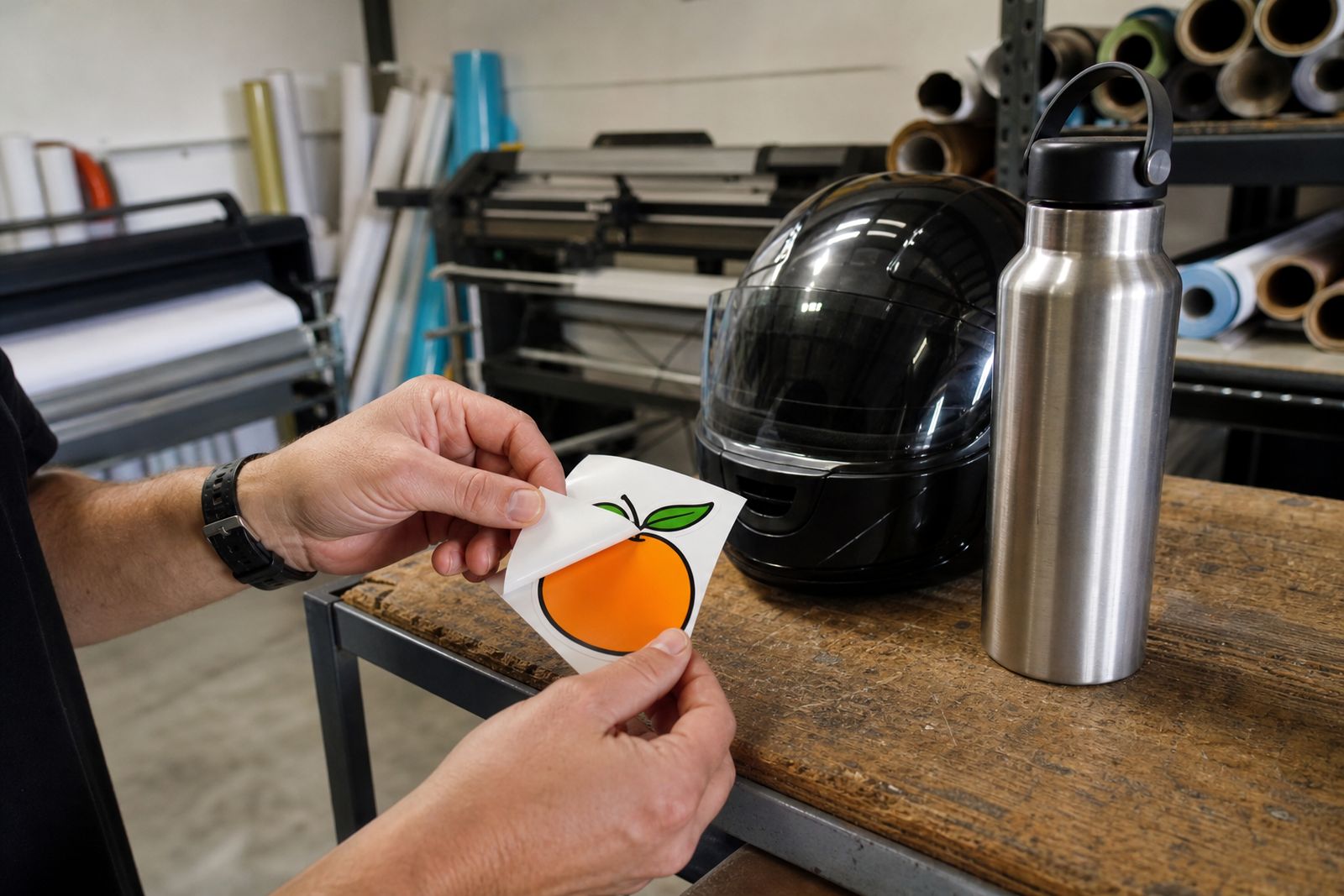
- Cooler boxes, hard cases, helmets and branded gear
- Fridges, cupboards and smooth home surfaces
- Boards and accessories with smooth sealed finishes
It is less suited to deep textured walls, silicone-rich surfaces, flexible rubber, dirty worksite equipment and areas with constant abrasion. For a curved surface with compound bends, a wrap film may be needed instead. For short event use on rough temporary boards, a mounted print can be quicker and better value.
Surface and installation requirements
Good adhesion starts with surface prep. The area must be clean, dry and free from wax, polish, silicone, chalking paint, salt residue and loose dust. New paint should be properly cured before any decal goes on. On marine jobs this matters a lot because polish and salt build-up often look harmless but can stop the vinyl from bonding properly.
Application is usually done dry on smaller decals and by controlled methods on larger sets, depending on the material and surface. Temperature also matters. Very cold mornings, very hot panels and windy outdoor fitting can affect placement and finish, so some jobs are better installed under cover. We check panel joins, rivets, recesses and edge exposure before recommending size and position, because a decal that crosses awkward hardware may not last as long there.
- Best surfaces are smooth glass, sealed paint, gelcoat and clean acrylic panels.
- Avoid applying over rust, flaking paint, fresh polish or uncured coatings.
- For boats, rinse salt off thoroughly and allow the surface to dry fully before fitting.
- For interior walls, the paint must be sound and low in texture.
Care and expected service life
Cut vinyl decals are low maintenance, but a bit of care helps them stay neat for longer. Wash with mild soap and water, then rinse and dry. Avoid harsh solvent cleaners, abrasive pads and pressure washing right on the decal edge. On vehicles and boats, regular cleaning is especially important in coastal areas where salt and grime can collect around corners and seams.
Sun exposure, colour choice, orientation and use all affect service life. Horizontal surfaces and leading edges usually wear faster than vertical sheltered areas. Dark colours on very hot panels can also behave differently to lighter colours. If you need a longer-term solution for heavy outdoor use, say so in your enquiry and we will match the vinyl grade to the job rather than guessing. A decal fitted well on the right surface usually lasts well, but poor prep can shorten life quite quickly.
What to send when you enquire
To quote and advise properly, we need the decal size, quantity, surface type and where the item will be used. The more specific you are, the easier it is to recommend the right film and fitting method. If the decals are for a boat, vehicle or fitted glass, mention whether you need supply only or installation as well. Please use the contact form on our contact page and include photos where possible.
- Artwork file if available, preferably vector PDF, AI, EPS or SVG
- Width and height in mm, or a photo with a tape measure in view
- Number of decals required
- Surface description such as glass, painted metal, gelcoat, plastic or wall paint
- Indoor or outdoor use, and whether the item is kept near the coast
- Single colour or layered colours, gloss or matt if known
- Whether you need collection-ready decals or on-site installation
If the artwork is not ready, send the clearest version you have and a note on the intended size. We can check whether it will cut cleanly or whether a different product would suit better.
What our Printing and Signage customers say
Verified Google reviews
Questions we get asked
Can cut vinyl decals include full-colour logos?
Only if the logo is simplified into solid colour layers. If your artwork has gradients, shading or photographic detail, a printed sticker or printed wrap material will usually be the better choice.
Will decals stick to any wall?
No. They work best on smooth, sound painted walls with low texture. Rough plaster, chalky paint and damp areas can cause poor adhesion or edge lift.
Can you supply decals for me to apply myself?
Yes, for suitable sizes and surfaces. Let us know the application surface and final size in your enquiry through the contact form so we can advise whether supply only is practical.

Ask for a quote
Use the contact form to tell us what you want printed, where it will be used and whether fitting is needed, and Galloping Naartjie will reply with a quote.
Open the contact form