

Boat signage
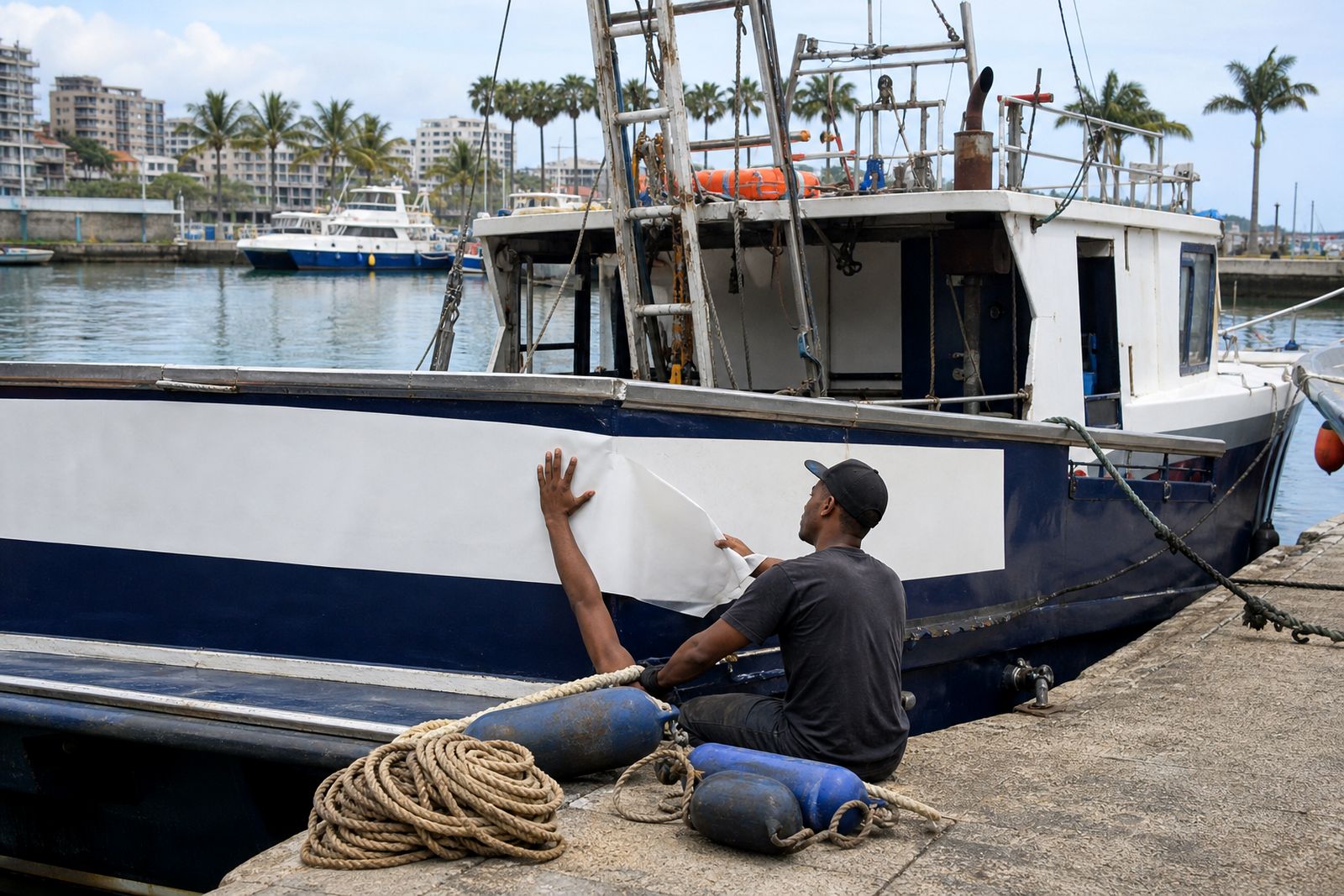
Boat signage needs to stay readable in sun, spray and regular washdowns. We supply boat names, registration numbers and practical graphics for leisure craft, charter boats and working vessels across Durban and KwaZulu-Natal.
What is included with boat signage
We produce and fit the visible markings that help a boat look finished and stay identifiable on the water, on the trailer and at the launch site. This includes simple cut lettering, printed graphics, hull stripes, transom names, registration numbers, home port markings and smaller decals for storage lids, consoles and safety notices. Where needed, we can also supply matched sets for both port and starboard sides so the sizing and spacing stay consistent.
For boats used around Durban, Richards Bay, Ballito, Shelly Beach and inland dams, the main requirement is material that handles salt air, hard sun and regular cleaning. We use marine-suited self-adhesive vinyls for smooth gelcoat, painted surfaces and some sealed panels. For curved hull sections or more involved artwork, printed vinly can be laminated for better colour hold and easier cleaning.
- Boat names for hull sides and transoms
- Registration numbers and identification lettering
- Launch site, club or home port text where required
- Hull graphics and stripes
- Console labels and practical decals
- Trailer matching decals if you want a complete set
Suitable materials and typical sizes
Not every boat needs a full wrap. Many owners only need a clean set of names and numbers that can be read from a sensible distance and hold up well after rinsing, cover use and towing. For these jobs we normally work with solid colour cut vinyl for crisp edges and good durability. Printed vinyl is useful when you want fades, images, colour blends or logos.
Letter height depends on the available panel space and the visibility you want. On smaller ski boats and pontoons, registration numbers often fall in the 80 mm to 150 mm range, while names on the transom may sit from 100 mm up to 250 mm or more. Larger hull sides can take much bigger lettering if you want stronger visibility from the slipway or harbour. Final sizing is worked out from photos and measurements so the graphics sit properly along the sheer line and do not crowd fittings, cleats or rails.
- Cut vinyl lettering for sharp text and simple shapes
- Printed and laminated vinyl for full colour graphics
- Application suited to smooth gelcoat and painted marine surfaces
- Common text sizes from 80 mm to 250 mm+, depending on panel space
- Supplied as paired side sets where needed
How the process works step by step
We keep the process simple so the fitting day goes smoothly. First, send an enquiry through the contact form with the boat type, where it is based and what you need marked. Photos of both sides, the transom and any awkward curves help a lot. If you already know the name, number style or colour choice, include that from the start.
Next, we review the surfaces and the intended size. Some boats have clean, straight sections that are ideal for larger graphics, while others need shorter layouts because of chines, vents, rails or fenders. Once the wording, sizes and positions are agreed, the graphics are cut or printed, weeded, taped and prepared for fitting.
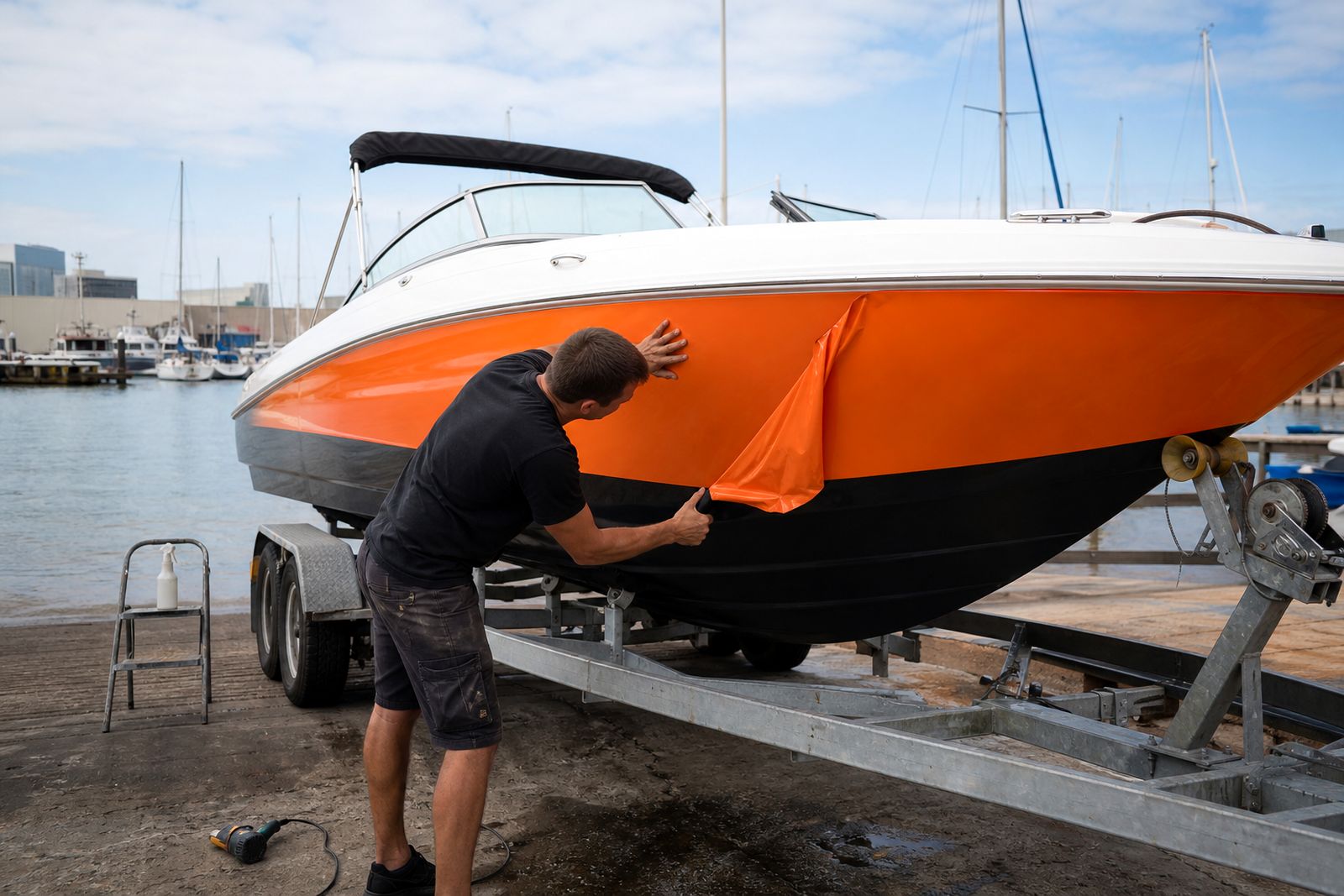
Installation is done onto a clean, dry surface. We align from fixed points on the hull so the left and right sides match. Complex curves may need panel breaks or careful heat setting to help the vinyl conform properly. After fitting, the graphics are checked for edge contact and trapped moisture before the boat is released.
- Enquiry through the contact form
- Photos, measurements and location details reviewed
- Sizing and placement confirmed
- Graphics produced and prepared
- Boat cleaned and fitted
- Final check before handover
What you should prepare before we fit
A good result starts with the surface. The hull or transom section should be washed, fully dry and free from wax, silicone dressings, polish residue and chalky oxidation. If a previous name or number has been removed recently, any remaining adhesive needs to be cleaned off fully or the new lettering may not sit flat. Fresh paint must be properly cured before any vinyl goes on.
Please also confirm the exact spelling, spacing and case of the boat name, plus any registration details that must appear. If you want a particular colour match to upholstery, striping or trailer paint, include clear daylight photos. For boats stored in marinas or stacked facilities, let us know access hours and whether shore power, water or lift access is restricted, it saves time on the day.
- Clear photos of port side, starboard side and transom
- Basic measurements of the area to be marked
- Exact wording, number sequence and preferred colours
- Surface cleaned of wax, polish and old adhesive
- Safe access to the boat for fitting
How pricing is worked out
Boat signage is quoted case by case rather than from a fixed list. The main factors are the overall size of the lettering or graphics, the material type, how many colours are involved and the condition of the surface being fitted. Straightforward cut names and numbers on flat sections are quicker to produce and install than full colour graphics that cross curves, steps or fittings.
Access also matters. A boat on a trailer at a home or yard is usually simpler than a vessel in a marina berth or stacked bay with limited room around the hull. Removal of old vinyl, cleaning of adhesive residue and any alignment needed across both sides can also affect the total. If you want a quote, send the boat photos and measurements through the contact form and we will price the job on the actual requirements rather than guessing.
Aftercare in coastal conditions
Freshly applied boat graphics should be left alone for a short settling period before hard washing or aggressive polishing. Once cured, normal rinsing with fresh water is the best habit, especially after sea use around Durban and the North Coast where salt deposits build quickly. Use mild soap and a soft cloth or sponge rather than harsh solvents, abrasive pads or pressure washing directly at the edges.
Keep waxes and strong cleaners off the vinyl edges where possible. If the boat is covered, make sure the cover does not flap heavily against raised corners or sharp hardware. Small edge damage is easier to sort out early than after water and dirt work underneath. If you notice lifting, scratches or impact damage, contact us through the form so we can advise on a repair or replacement section.
With sensible care, names and numbers stay neat and readable for regular local use, and they make launch day easier too.
What our Printing and Signage customers say
Verified Google reviews
Questions we get asked
Can you replace old boat names without redoing everything?
Yes. If the old graphics can be removed cleanly and the surface is still in good condition, we can fit a new name or updated numbers only. If ghosting or adhesive staining remains, we will advise on the best way to prepare the area first.
Do you only do large boat graphics?
No. We handle small registration numbers, simple transom names and practical decals as well as larger hull graphics. Many jobs are straightforward identification sets rather than full wraps.
Will the signage last in Durban coastal conditions?
Marine signage is made for outdoor use, but lifespan depends on sun exposure, salt, cleaning methods and storage. Regular rinsing, mild cleaning and quick attention to edge damage will help it last better.
Also worth a look
Ask for a quote
Use the contact form to tell us what you want printed, where it will be used and whether fitting is needed, and Galloping Naartjie will reply with a quote.
Open the contact form