

Boat wraps
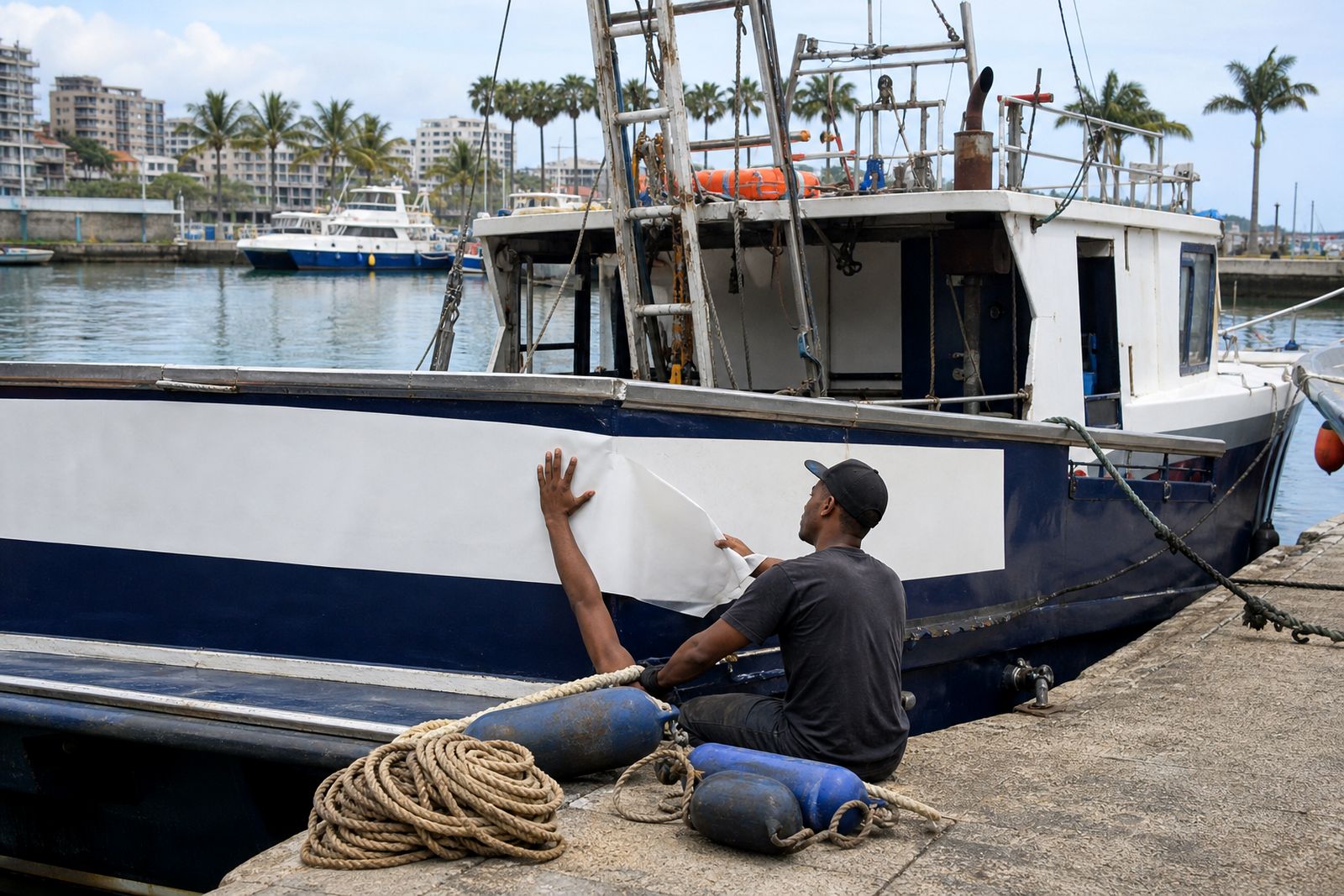
Boat wraps give hulls, cabin sides and transoms a clean branded finish without repainting. Galloping Naartjie supplies printed marine graphics in Durban and across KwaZulu-Natal for leisure boats, charter craft and working vessels.
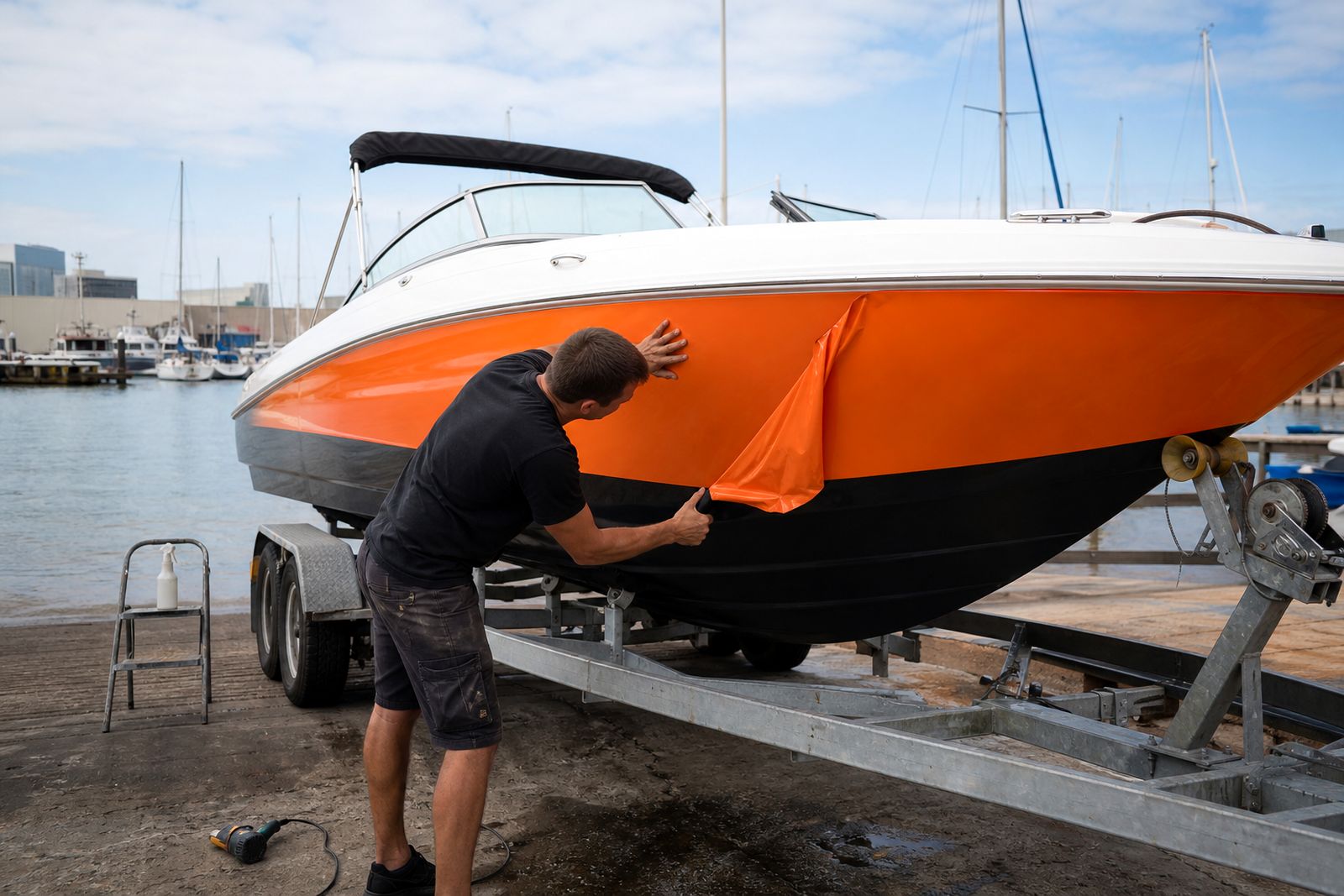
What Is Included In A Boat Wrap
Our boat wrap service covers printed and cut vinyl graphics for visible marine surfaces such as hull sides, cabin panels, transoms, consoles and selected interior panels above deck. We produce partial wraps, striping kits, registration graphics, sponsor panels and near full side coverage depending on the size and shape of the vessel. For Durban clients this is often used to refresh faded gelcoat, add racing stripes, carry event branding or make a ski-boat, fishing boat or charter vessel easier to identify on the water.
We work from supplied artwork or from a clear brief with reference images, measurements and photos of the boat on the trailer, at dry dock or at the marina. Fitting is planned around weather, access and the condition of the surface because salt, chalking and polish residue can affect adhesion quite badly.
- Printed hull graphics and colour panels
- Boat names, port lettering and registration numbers
- Transom branding and side stripes
- Small safety labels and launch site identifiers
- Removal of old vinyl where practical before new fitting
Materials And Practical Marine Specs
Boat wraps are not the same as ordinary indoor stickers. We use outdoor vinyl suited to sun, spray and regular washing, with laminate where print protection is needed. On smooth fibreglass and painted aluminium surfaces this gives a neat finish with good colour hold if the surface is sound and the graphics are cared for properly. For boats kept near the coast, humidity and salt mist matter, so we allow for cleaning and drying time before installation.
Very deep channels, heavily textured hulls and badly oxidised gelcoat may need a simpler graphics approach instead of full coverage. We will advise on this after seeing the boat because forcing wrap film into unsuitable areas usually leads to lifting at the edges.
- Outdoor printed vinyl with UV laminate for most full colour work
- Cut colour vinyl for names, numbers and simple striping
- Typical print resolution suited to close viewing at the dock
- Applied to cured paint, gelcoat and smooth marine panels
- Fitted dry in controlled sections with post-heating where needed
The Process Step By Step
We start with an enquiry through the contact form, then review photos, overall length, beam where relevant, launch method and where the vessel can be accessed. From there we advise whether a full wrap, partial wrap or set of individual decals makes the most sense.
Once the scope is agreed, the process usually runs like this:
- Measure-up from supplied dimensions or an on-site check in Durban or nearby coastal areas.
- Artwork setup to suit the actual hull shape, rails, hatches and fittings.
- Print production and lamination, then curing time before fitment.
- Surface cleaning and removal of old graphics if included.
- Installation in sections, trimming around fittings and final edge checks.
- Handover with care notes for washing, launch timing and inspection.
We prefer fitting with the boat out of the water and well supported, with enough room along both sides. If the vessel is in a yard or marina, access rules and working hours should be confirmed in advance so the install is not rushed.
How To Prepare Your Boat Before Fitting
Good prep affects how long the wrap lasts. The surface must be structurally sound, clean and dry, with no fresh polish, silicone dressing or flaking paint. If there are repairs planned, these should be completed first because vinyl will show dips, cracks and rough filler lines underneath.
Before the fitting date, the client should make sure the boat is ready in a practical way:
- Wash off salt, grime and fish residue well before the appointment.
- Do not apply wax, polish or tyre-shine type products near the graphics area.
- Remove loose accessories if they block access to the hull side.
- Confirm registration wording and spelling exactly as required.
- Provide a dry covered area if possible, especially in wet or windy weather.
If old decals are being removed, some ghosting or colour difference may remain on faded hulls. That is normal on older surfaces, and a new wrap can reduce the visual contrast though it may not hide severe oxidation completely.
How Pricing Is Worked Out
Boat wrap pricing depends on area covered, material choice, print complexity and installation conditions. We do not use a single rate for all vessels because a small rubber duck side panel and a large fibreglass sport boat take very different amounts of prep, print and labour. Access at a marina, removal of old vinyl and the number of cut-outs around rails, cleats and vents also affect the quote.
In general terms, we look at:
- Overall size of the boat and the square metres to be covered
- Full wrap, partial wrap or simple name and numbering set
- Condition of the gelcoat or painted surface
- Amount of old adhesive or vinyl to remove
- Travel, site access and whether the boat is under cover
- Artwork time for custom layouts and supplied file quality
For an accurate figure, send photos of both sides, the transom, close-ups of damaged areas and your best measurements through the contact form. If you already know the hull length and want strip sizes or logo positions, include that as well, it helps speed things up.
Aftercare And Expected Life
After fitting, leave the graphics alone for the settling period we advise before heavy washing or long runs at speed. Once the adhesive has settled, wash with mild soap and fresh water rather than aggressive solvents. In Durban and along the KwaZulu-Natal coast, salt build-up should be rinsed off regularly to keep edges cleaner and colours brighter.
To get better service life from the wrap:
- Rinse after use in salt water where practical
- Use a soft cloth or sponge, not harsh abrasive pads
- Avoid pressure washing directly into edges and seams
- Clean bird droppings, fuel drips and sunscreen marks quickly
- Store under cover when possible during long idle periods
Marine graphics are consumable over time, especially on craft kept outdoors full time. Exposure, launch frequency and surface condition all matter. If an edge lifts or a panel gets cut, contact us through the enquiry form early because a small repair is usually simpler than replacing a large section later.
What our Printing and Signage customers say
Verified Google reviews
Questions we get asked
Can you wrap the whole boat?
In many cases yes, but it depends on the surface condition, shape and the areas you want covered. Some boats suit a full side wrap, while others are better with partial panels and cut lettering.
How long does a boat wrap take?
Timing depends on size, prep, print curing and access. A simple name and registration set is much quicker than a multi-panel printed hull wrap, so we confirm lead time after reviewing the job.
Will the wrap damage my gelcoat when removed?
A properly fitted graphic on a sound surface should remove more cleanly than paint, but older boats with oxidation, repairs or poor previous coatings can behave differently. We inspect and advise before proceeding.
Also worth a look
Ask for a quote
Use the contact form to tell us what you want printed, where it will be used and whether fitting is needed, and Galloping Naartjie will reply with a quote.
Open the contact form