

Vehicle graphics
Vehicle graphics give cars, vans and bakkies a clear working identity on the road and on site. Galloping Naartjie supplies printed and cut vinyl graphics for everyday business use across Durban and KwaZulu-Natal, with fitting planned around the vehicle, the route and the finish required.
What vehicle graphics include
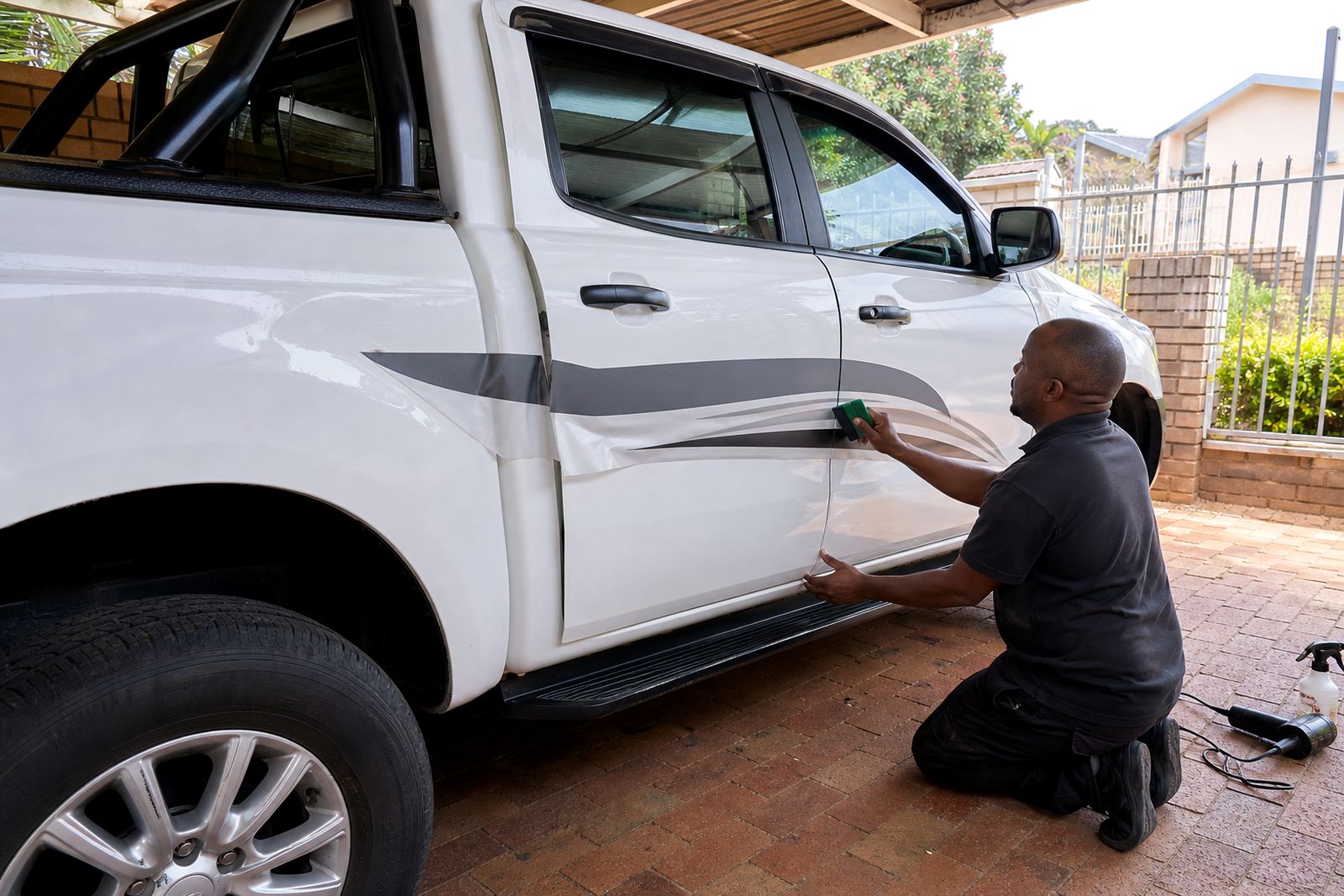
Vehicle graphics cover more than a logo on a door. We produce practical branding for private cars used for work, delivery vehicles, service vans, contractor bakkies and small fleets that need a consistent look. Depending on the job, this can include cut vinyl lettering, printed logos, partial side graphics, rear window graphics on suitable film, bonnet branding and reflective safety markings where required.
The aim is simple: clear identification that reads properly from a pavement, in traffic or at a client property. In Durban conditions that means choosing materials that can handle heat, rain and regular washing without lifting at the edges too quickly. We match the graphic layout to the body shape, panel lines and door handles so the vehicle still looks neat when it opens and closes.
- Door logos and contact details
- Side stripes and full side panels
- Rear tailgate and back door graphics
- Bonnet and roof identification where visibility matters
- Reflective elements for service and site vehicles
- Short-run branding for activations and events
Best uses for cars, vans and bakkies
Cars suit lighter branding where you want a tidy, professional look without covering every panel. Vans give more print area and work well for larger messages, route branding and product images. Bakkies often need a tougher approach because canopies, load bins and dusty conditions affect both layout and material choice.
For trade vehicles, legibility matters more than cramming in extra text. A good layout usually prioritises the business name, service type and a simple call to action through the contact page. On smaller vehicles we may recommend fewer words and larger letter height so the branding still reads while moving. If the vehicle spends time near the coast, adhesive choice and edge sealing may need a bit more attention due to humidity and salt in the air.
Our process from enquiry to fitting
We start with your enquiry through the contact form, then confirm the vehicle type, quantity, use and area of application. From there we work through measurements, artwork setup and fitting arrangements. If you have mixed vehicles in one fleet, each shape is checked separately so the branding lands in the right place rather than being stretched from one template to another.
- Step 1: Send your enquiry with the vehicle make, model, body style and clear photos of each side.
- Step 2: We review what needs branding and whether cut vinyl, printed vinyl or a combination will suit the job.
- Step 3: Panel measurements are confirmed, either from templates and photos or by inspecting the vehicle.
- Step 4: Artwork is prepared for scale, readability and panel breaks.
- Step 5: Print and cutting are scheduled, then the vinyl is laminated where needed for added surface protection.
- Step 6: The vehicle is cleaned, surface-prepped and fitted in sections.
- Step 7: Final checks are done around handles, trims, fuel flaps and edges before collection.
Fitting times depend on coverage and access. A simple pair of door graphics can be done fairly quickly, while a larger van with side and rear coverage needs more time for prep and alignment. We prefer a clean, dry vehicle and a sheltered fitting area when weather is poor.
What you need to prepare
The best result starts before any vinyl is opened. Please send clear photos of the vehicle from the left, right, front and rear, and mention any dents, resprayed panels, loose trim or existing decals. If old graphics need removal, that should be allowed for because adhesive residue and sun-faded paint can affect the final finish. On work bakkies this is common, especially on tailgates and canopy sides.
Vehicles must arrive washed and reasonably dry, with no polish, silicone dressing or fresh paint on the areas to be covered. Newly painted panels need proper curing time before graphics are applied. If there are site rules for reflective markings, unit numbers or municipal permit wording, include that early so it is built into the layout and not added later in a rush.
- Send vehicle photos from all sides
- Confirm quantity and whether all vehicles are the same model
- Provide your logo in a usable file if available
- Note any old vinyl, damage or panel repairs
- Mention deadlines linked to launches, events or inspections
- Advise if the vehicle is stored near the coast or used off-road often
How pricing is worked out
Vehicle graphics are usually priced according to the size of the coverage, the material needed, print and lamination requirements, the complexity of fitting and the condition of the vehicle surface. A small pair of cut vinyl door logos is a different job from a full printed side graphic over recessed panels and canopy joins. Removal of old vinyl, paint sensitivity and access issues can also affect the quote.
Quantities matter as well. One vehicle needs individual setup and fitting, while a group of matching vans can often be planned more efficiently. If the artwork needs significant redrawing or each vehicle carries different unit details, that changes the job scope. For an accurate quote, use the contact form and include photos, vehicle details and the areas you want branded.
Materials, fitment and aftercare
We use vehicle-grade self-adhesive vinyl selected to suit either flat panels or more complex curves. Printed graphics are generally laminated for better resistance to sun, abrasion and routine cleaning, while simpler text and line work may be cut from solid colour vinyl. Window graphics are only used where visibility and legal use allow it. For body mouldings, textured plastics and unpainted bumpers, we assess each area first because not every surface holds vinyl equally well.
After fitting, the adhesive needs a short settling period. Avoid washing the vehicle straight away and do not direct a pressure nozzle at edges, corners or joins. Hand washing with a mild detergent is usually the safest option. If you notice an edge lifting, get it checked early before dirt works underneath. Small maintenance visits can save a larger refit later, and thats often worth doing on busy vehicles.
Vehicles parked in direct sun all day will age faster than those kept under cover. Coastal use can also shorten the life of exposed edges if salt is left to build up. A bit of regular care goes a long way with vinyl graphics.
What our Printing and Signage customers say
Verified Google reviews
Questions we get asked
Can you apply graphics over old decals?
Old decals usually need to be removed first. This allows us to check paint condition, remove residue and fit the new graphics on a clean surface.
Do vehicle graphics damage paint when removed?
On sound original paint, properly fitted vinyl is generally removable. Problems are more likely on weak paint, fresh resprays or panels that were already peeling.
How do I get a quote for my vehicle?
Use the enquiry form on the contact page and send the vehicle type, quantity, clear photos and a short note on what you want covered.
Also worth a look
Ask for a quote
Use the contact form to tell us what you want printed, where it will be used and whether fitting is needed, and Galloping Naartjie will reply with a quote.
Open the contact form